
God is ALL in All
This is a Philosophical and Spiritual endeavor to extract, Harmonize, and synthesize the Universal Truths underlying the world's Diverse Religious, Mystical, and Philosophical traditions. Most famously associated with the concept of Perennial Philosophy, it posits that All Major Traditions share a single, transcendent metaphysical Source and Core Set of Truths.
"By the Power of Truth, I, while Living, have Conquered the Universe."
"I Am Nothing, yet I Am Everything."
Righteousness — The Harmony of Justice and Divine Law
The Divine Power of Righteousness
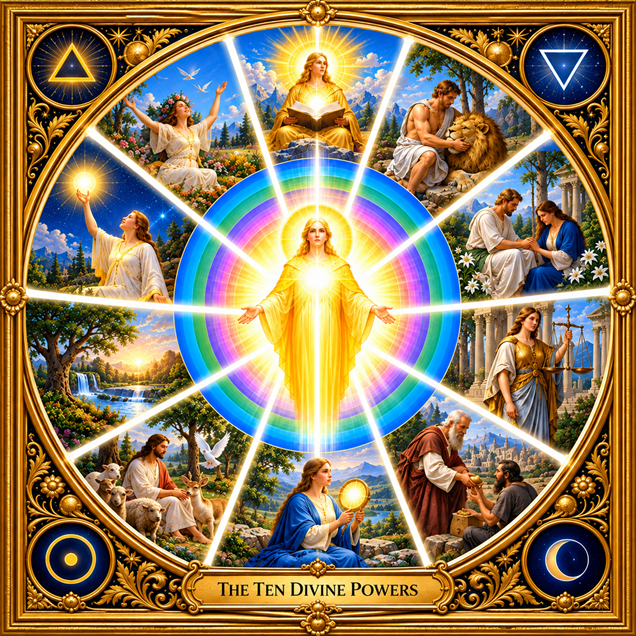
Righteousness is one of the Ten Divine Powers revealed in Corpus Hermeticum XIII, The Secret Sermon on the Mountain. In the Hermetic account of Spiritual Regeneration, Righteousness displaces the tormenting influence of Injustice, transforming the individual's relationship with Truth, moral responsibility, and the welfare of others. Righteousness signifies a condition in which Understanding and conduct are brought into Harmony. It is not sufficient to recognize what is right; that Recognition must become the governing principle of one's actions.
The Righteous individual seeks to live according to principles that transcend personal convenience, selfish advantage, and the changing opinions of society. Such conduct arises from an Inner Recognition of the Good rather than mere obedience to external authority. Righteousness is therefore not simply a standard imposed upon the individual. It becomes an expression of the individual's awakened Spiritual Nature.
The Symbolism of the Woman and the Scales
Our illustration depicts a woman holding the scales of Justice, an ancient emblem of balance, impartiality, and moral discernment. The two sides of the scales symbolize the careful consideration necessary for Righteous judgment. Personal desire must be weighed against responsibility; individual interests against the rights of others; and outward appearances against the Truth of a situation. The woman's composed bearing represents the Inner equilibrium required to judge without being governed by anger, prejudice, fear, or personal attachment.
The scales also suggest the relationship between Cause and Effect. Every conscious action carries consequences, whether immediately apparent or revealed through the gradual development of character and circumstance. In this symbolism, Justice is not an instrument of revenge. Its purpose is the restoration and preservation of Harmony. The scales must remain balanced, but their balance requires Wisdom in the one who holds them.
Injustice and the Unregenerated Soul
Among the Twelve Tormentors, Injustice represents the distortion of moral judgment through Ignorance, selfishness, and attachment to personal advantage. Injustice may appear in obvious forms such as dishonesty, exploitation, cruelty, and deliberate harm. It may also operate through indifference, prejudice, the misuse of authority, or the refusal to acknowledge another person's rightful dignity.
An individual governed by Injustice often evaluates circumstances according to what can be gained or lost personally, rather than according to what is True and Right. This condition can become especially destructive when selfish conduct is justified through intellectual reasoning. The Mind, instead of serving Wisdom, becomes an instrument for defending actions that conscience might otherwise reject. Spiritual Regeneration requires the reversal of this relationship. Understanding must guide personal interest, rather than personal interest determining what the individual is willing to Understand.
Divine Law and Moral Responsibility
Throughout Hermetic philosophy, the Cosmos is understood as an ordered expression of Divine Intelligence. Human beings participate in this order and are responsible for the manner in which they exercise their faculties. Righteousness involves bringing human conduct into greater Harmony with that Spiritual Order. Divine Law, in this philosophical sense, is not merely a collection of commandments or prohibitions. It expresses the principles through which Life, Relationship, Responsibility, and Harmony are understood.
The individual who recognizes the interdependence of Life becomes increasingly aware that actions affecting others cannot be separated from one's own Spiritual development. Dishonesty damages trust. Cruelty diminishes Compassion. Exploitation substitutes selfish advantage for Justice. Conversely, sincerity, fairness, and responsible conduct strengthen the qualities through which a harmonious Life becomes possible. These consequences are not always immediate or proportionate. Nevertheless, the repeated exercise of moral choice shapes character and determines the direction of Inner development. Righteousness requires accepting responsibility for that direction.
Justice, Mercy, and Discernment
Justice without Compassion can become harsh and inflexible. Compassion without discernment can permit wrongdoing to continue. Righteousness seeks the Wisdom necessary to hold these qualities in proper relationship. To act Righteously does not mean avoiding difficult judgments or refusing to confront harmful behavior. There are circumstances in which fairness requires firm boundaries, truthful correction, or decisive action. Yet the motive behind such action matters. The desire to humiliate, punish, or retaliate may corrupt an otherwise legitimate pursuit of Justice.
Mercy recognizes the possibility of human growth and Transformation. Justice recognizes the necessity of responsibility. Together, they encourage responses that protect dignity without abandoning Truth. The woman holding the scales represents this disciplined balance: neither sentimental indulgence nor uncompromising severity, but the thoughtful application of moral Understanding.
Righteousness in Daily Life
The practical expression of Righteousness is often found in ordinary circumstances rather than extraordinary acts. It appears when an individual speaks Truth despite personal inconvenience, fulfills an obligation without external pressure, treats another fairly despite disagreement, or acknowledges an error without attempting to escape responsibility. Righteousness also requires consistency between private and public conduct. A person who behaves honorably only when observed has not yet established Integrity as an Inner principle.
The development of this Power therefore demands continual self-examination. Are judgments influenced by prejudice? Are actions consistent with professed principles? Is the same standard of fairness applied to oneself and others? Such questions are not intended to cultivate guilt or self-condemnation. They encourage Conscious Recognition of the distance that may remain between Understanding and its practical expression. Through honest correction and disciplined action, Integrity becomes increasingly natural.
Righteousness and Spiritual Regeneration
Within the Hermetic process of Regeneration, Righteousness marks an important development in the expression of the awakened Soul. Knowledge of God establishes Spiritual Understanding. Self-Control develops Inner authority. Continence brings Desire into Harmony with Wisdom. Righteousness directs these developing faculties toward Justice, Integrity, and responsible conduct.
Its influence prepares the Soul for Generosity, because genuine concern for the welfare of others requires the Recognition that their dignity and needs possess significance beyond personal advantage. The woman holding the scales embodies this achievement. Her balance represents a Consciousness capable of weighing circumstances through Wisdom rather than selfish impulse, and her composure reflects the Inner Harmony necessary for Righteous action.
Righteousness is the Conscious expression of Justice through Wisdom, the alignment of conduct with Spiritual Understanding, and the willingness to do what is Right because it is Right.