God is ALL in All
This is a Philosophical and Spiritual endeavor to extract, Harmonize, and synthesize the Universal Truths underlying the world's Diverse Religious, Mystical, and Philosophical traditions. Most famously associated with the concept of Perennial Philosophy, it posits that All Major Traditions share a single, transcendent metaphysical Source and Core Set of Truths.
"By the Power of Truth, I, while Living, have Conquered the Universe."
"I Am Nothing, yet I Am Everything."
Intemperance — The Bondage of Excess
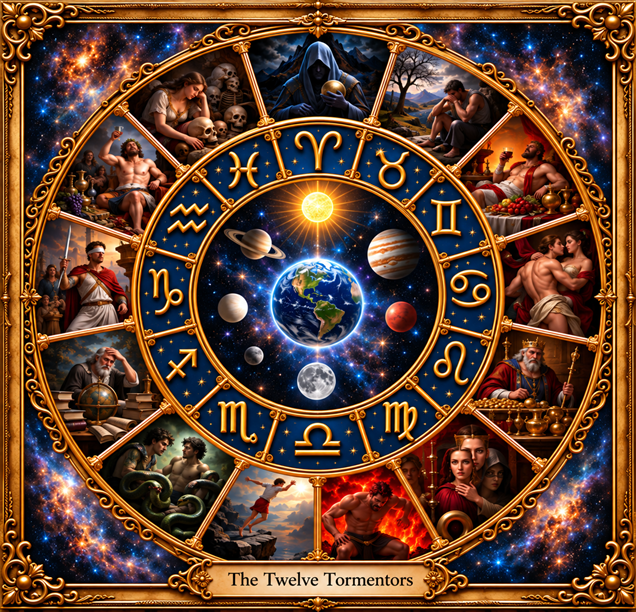
Continuing clockwise around the illustration, we encounter a reclining man surrounded by an abundance of food, fruit, wine, and luxurious furnishings. Dressed in rich garments, he raises a goblet as though celebrating the pleasures of material existence. His relaxed posture and the lavish setting suggest a Life devoted to comfort, indulgence, and the gratification of the senses.
The overflowing table is particularly significant. Food and drink are necessary for sustaining physical life, and their enjoyment is a natural part of human existence. Yet the abundance displayed in this scene suggests something beyond ordinary nourishment. It represents the possibility that the pursuit of pleasure may become excessive, gradually transforming legitimate enjoyment into dependency upon sensory gratification. The raised goblet symbolizes this relationship between desire and self-restraint. Wine has long appeared in religious, philosophical, and artistic traditions as a symbol of celebration, vitality, and enjoyment. However, when consumed without moderation, it may also represent the surrender of reason and judgment to appetite. The goblet therefore becomes a reminder that the same material substance may be enjoyed wisely or abused through excess.
In Corpus Hermeticum XIII, Intemperance is identified among the Twelve Tormentors associated with the Unregenerated human condition. It represents the lack of Inner Discipline through which bodily appetites and material pleasures gain influence over Consciousness. The deeper meaning of Intemperance extends beyond excessive eating, drinking, or physical enjoyment. It may also manifest through the relentless pursuit of wealth, possessions, entertainment, recognition, or any satisfaction that becomes necessary to one's sense of happiness and fulfillment. The Tormentor is not pleasure itself, but the loss of freedom that occurs when pleasure becomes the governing principle of Life.
A person may possess considerable material wealth and remain inwardly free, while another may possess very little yet remain consumed by the desire for more. Intemperance is therefore measured not merely by the quantity of what is enjoyed, but by the degree of control that appetite exercises over the individual. Within the Hermetic understanding of Spiritual Regeneration, the overcoming of Intemperance is associated with the Awakening of Self-Control. This Divine Power restores the proper relationship between Consciousness and the appetites, allowing the individual to experience the material world without becoming enslaved by it. Self-Control should not be confused with the rejection of all pleasure or the denial of the body's legitimate needs. Rather, it represents the restoration of Inner Harmony, in which reason and Spiritual Understanding guide the appetites instead of being governed by them.
The reclining figure thus represents a Soul that has mistaken the abundance of material pleasures for the fullness of existence. Surrounded by everything that might satisfy the senses, he remains vulnerable to a deeper poverty: the absence of Spiritual Freedom. The lesson of Intemperance is not that the pleasures of Life must be abandoned, but that they must never be permitted to become the Masters of Consciousness.
True Freedom is not the ability to
satisfy every desire,
But the Wisdom to remain
Master of Oneself.