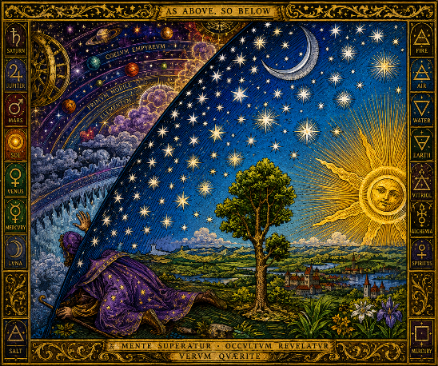
God is ALL in All
This is a Philosophical and Spiritual endeavor to extract, Harmonize, and synthesize the Universal Truths underlying the world's Diverse Religious, Mystical, and Philosophical traditions. Most famously associated with the concept of Perennial Philosophy, it posits that All Major Traditions share a single, transcendent metaphysical Source and Core Set of Truths.
"By the Power of Truth, I, while Living, have Conquered the Universe."
"I Am Nothing, yet I Am Everything."
Christianity
I. Origins and the Life of Jesus the Christ
Christianity is the world's largest religion, with more than two billion followers distributed across every continent. Founded in the first century CE in the Roman province of Judea, Christianity is centered upon the life, teachings, death, and resurrection of Jesus the Christ, whom Christians believe to be the promised Messiah and the Son of God. Christianity teaches that God created the Universe, Loves Humanity, and offers salvation from sin through Faith in Jesus the Christ. Over two thousand years, Christianity has profoundly influenced history, law, philosophy, education, art, science, and culture, becoming one of the most significant forces in the development of Western civilization and spreading throughout nearly every nation on Earth.
Christianity emerged from Judaism during the first century CE. Jesus the Christ of Nazareth was born into a Jewish family in Bethlehem and raised in Nazareth. Christians believe that His birth fulfilled numerous Old Testament prophecies concerning the coming Messiah who would redeem humanity. At approximately thirty years of age, Jesus the Christ began a public ministry that lasted about three years. He traveled throughout Galilee and Judea teaching about the Kingdom of God, calling people to repentance, healing the sick, performing miracles, and demonstrating God's love and mercy. His teachings emphasized love for God, love for one's neighbor, forgiveness, humility, compassion, and faithfulness to God's commandments. According to the New Testament, Jesus the Christ was arrested by the Jewish religious authorities, condemned under the Roman governor Pontius Pilate, and crucified around 30–33 CE. Christians believe that His death served as a sacrifice for the sins of humanity and that He rose bodily from the dead on the third day. After appearing to His disciples over forty days, Jesus the Christ ascended into heaven and commissioned His followers to spread His teachings throughout the world. The apostles, especially Peter and Paul, established Christian congregations across the Roman Empire. Despite periods of severe persecution, Christianity spread rapidly. In the fourth century, Emperor Constantine legalized Christianity, and later it became the official religion of the Roman Empire.
II. The Holy Trinity and Core Theology
Christianity teaches belief in One Eternal God who exists as three distinct Persons: God the Father, God the Son (Jesus the Christ), and God the Holy Spirit. This doctrine is known as the Trinity. Christians believe these three Persons are distinct yet share one Divine Nature and are equally Eternal, All-Powerful, and Worthy of Worship. Jesus the Christ is regarded as both fully God and fully human. Christians believe that He lived a sinless Life, willingly died on the cross to atone for humanity's sins, rose from the dead, and now reigns in heaven. Unlike prophets or religious teachers, Jesus the Christ is understood to be the Savior whose sacrificial death and resurrection make reconciliation with God possible. Salvation is viewed as God's gift of grace. Christians believe that those who place their faith in Jesus the Christ, repent of their sins, and accept Him as Lord receive forgiveness, eternal life, and reconciliation with God.
The central teaching of Christianity is that God loves humanity and desires a personal relationship with every individual. Christians believe that all people have sinned and fall short of God's perfect standard, making salvation necessary. Faith in Jesus the Christ is regarded as the means by which believers receive God's grace. Christians also emphasize repentance, baptism, prayer, worship, study of Scripture, and participation in the life of the Church. Jesus the Christ summarized God's moral law in two great commandments: to Love God with All One's Heart, Soul, Mind, and Strength, and to Love One's Neighbor as Oneself. Christians therefore strive to practice forgiveness, compassion, humility, honesty, generosity, and justice. Most Christians believe in heaven, hell, the resurrection of the dead, the final judgment, and the eventual return of Jesus the Christ to establish God's Eternal Kingdom.
III. The Bible and Sacred Scripture
The Christian Bible consists of two major sections: the Old Testament and the New Testament. The Old Testament contains many of the sacred writings shared with Judaism, including the books of Moses, the historical books, the Psalms, the wisdom literature, and the prophetic writings. The New Testament records the Life and teachings of Jesus the Christ through the four Gospels of Matthew, Mark, Luke, and John. It also contains the Acts of the Apostles, letters written by early Christian leaders such as Paul, Peter, James, and John, and concludes with the Book of Revelation. Christians regard the Bible as the inspired Word of God and the primary authority for faith and moral living.
IV. Worship, Sacraments, and the Liturgical Calendar
Christians gather for worship in churches where services commonly include prayer, singing hymns, reading Scripture, preaching, and celebration of the sacraments or ordinances. Most Christian traditions observe baptism as the public profession of faith and the Lord's Supper, also called Communion or the Eucharist, in remembrance of Jesus the Christ's death and resurrection. Prayer, Bible study, charitable service, missionary work, and participation in church life are considered essential elements of Christian discipleship. Major Christian celebrations include Christmas, commemorating the birth of Jesus the Christ; Good Friday, remembering His crucifixion; Easter, celebrating His resurrection; and Pentecost, marking the coming of the Holy Spirit upon the early Church.
V. The Great Schism and the Protestant Reformation
Although Christians share belief in Jesus the Christ as Savior, Christianity eventually Divided into several major branches because of disagreements concerning theology, church authority, and religious practices. The first major division occurred in 1054 CE and is known as the Great Schism. This separated the Roman Catholic Church in Western Europe from the Eastern Orthodox Church in the Byzantine Empire. The two churches differed over questions concerning papal authority, theology, and certain liturgical practices. The second major division occurred during the sixteenth century and became known as the Protestant Reformation.
By the late Middle Ages, many Christians believed that the Roman Catholic Church had departed from the teachings of the early Church. Concerns included corruption among some clergy, the sale of indulgences, political involvement by church leaders, and practices that many believed lacked clear biblical support. An indulgence was a document issued by church authorities claiming to reduce the temporal punishment for sin. Although indulgences were originally connected to acts of repentance, they were sometimes sold to raise money for church projects. Many Christians believed this practice gave the false impression that forgiveness could be purchased.
In 1517, a German monk and theology professor named Martin Luther publicly challenged these practices by posting his Ninety-five Theses. Luther argued that salvation comes through faith in Jesus the Christ rather than through human works or financial payments. He also insisted that the Bible, rather than church tradition alone, should be the highest authority for Christian doctrine. Other reformers, including Huldrych Zwingli, John Calvin, Thomas Cranmer, and later John Knox, promoted additional reforms. They objected to teachings such as the supreme authority of the pope, prayers directed to saints, the veneration of religious images, mandatory clerical celibacy, and certain sacramental practices they believed were unsupported by Scripture. The Catholic Church rejected many of these criticisms, leading to a permanent division within Western Christianity. Those who supported reform became known as Protestants because they protested against certain doctrines and practices of the Roman Catholic Church.
Today there are not simply a handful of Protestant churches but thousands of denominations throughout the world. Researchers estimate that more than 30,000 Protestant denominations exist globally, although many differ only in organization, language, or geography rather than fundamental beliefs. Most Protestant churches can be grouped into several major traditions. Lutheran churches trace their origins to Martin Luther and emphasize salvation by grace through faith, the authority of Scripture, and the importance of both preaching and the sacraments. Reformed or Presbyterian churches were strongly influenced by John Calvin and emphasize God's sovereignty, careful biblical teaching, and a representative form of church government led by elders. Anglican churches originated in England during the reign of King Henry VIII. They preserve many traditional forms of worship while incorporating numerous Protestant doctrines. The Episcopal Church in the United States belongs to the worldwide Anglican Communion. Baptist churches emphasize believer's baptism by immersion rather than infant baptism. They strongly support religious liberty, the independence of each local congregation, and the authority of Scripture. Methodist churches developed under the leadership of John and Charles Wesley during the eighteenth century. Methodism emphasizes personal holiness, evangelism, charitable service, and spiritual growth through disciplined Christian living. Pentecostal churches emerged during the early twentieth century and emphasize the active work of the Holy Spirit, spiritual gifts such as speaking in tongues, healing, and enthusiastic worship. Evangelical churches are not a single denomination but a broad movement emphasizing personal conversion, the authority of the Bible, evangelism, and the saving work of Jesus the Christ. Non-Denominational churches have become increasingly common during the past century. They often adopt evangelical beliefs while remaining independent of traditional denominational structures.
Although Protestants generally agree that salvation comes through faith in Jesus the Christ and that the Bible is the highest authority for Christian belief, they differ on several important issues. Some churches baptize infants, believing baptism is a covenant sign, while others baptize only individuals who personally profess faith. Church government also differs considerably. Some denominations are led by bishops, others by elected elders, while Baptist and many non-denominational churches are governed independently by each local congregation. Views concerning Communion vary. Some churches believe Christ is spiritually present in the Lord's Supper, others believe He is uniquely present in the elements, while still others view Communion primarily as a memorial. Worship styles range from highly structured liturgical services with formal prayers and robes to contemporary services featuring modern music and spontaneous prayer. Pentecostal churches generally emphasize miraculous spiritual gifts, while many other Protestant traditions interpret these gifts differently or believe some were unique to the earliest period of the Church.
Finally, Protestant churches vary in their interpretations of issues such as church leadership, end-times prophecy, social ethics, and certain theological doctrines. Despite these differences, most Protestant denominations recognize one another as fellow Christians because they share belief in the central doctrines concerning Jesus the Christ, His death and resurrection, and salvation by God's grace.
VI. Modern Christianity and Global Impact
Today Christianity is practiced by more than two billion people worldwide and is represented by three major branches: Roman Catholicism, Eastern Orthodoxy, and Protestantism. Together these branches include thousands of denominations, languages, cultures, and forms of worship while sharing belief in Jesus the Christ as Lord and Savior. Christian churches continue to play significant roles in education, healthcare, humanitarian relief, disaster response, social services, and international missions. Christian organizations operate many of the world's hospitals, universities, orphanages, and charitable institutions, reflecting the religion's long-standing commitment to caring for those in need.